
How to Choose Wire Wheels for Lowriders and Classic Cars
Choosing wire wheels means comparing more than diameter and spoke count. Lace pattern, wheel configuration, finish, adapters, accessories, vehicle specifications, and modifications all affect which setup is appropriate for your lowrider or classic car.
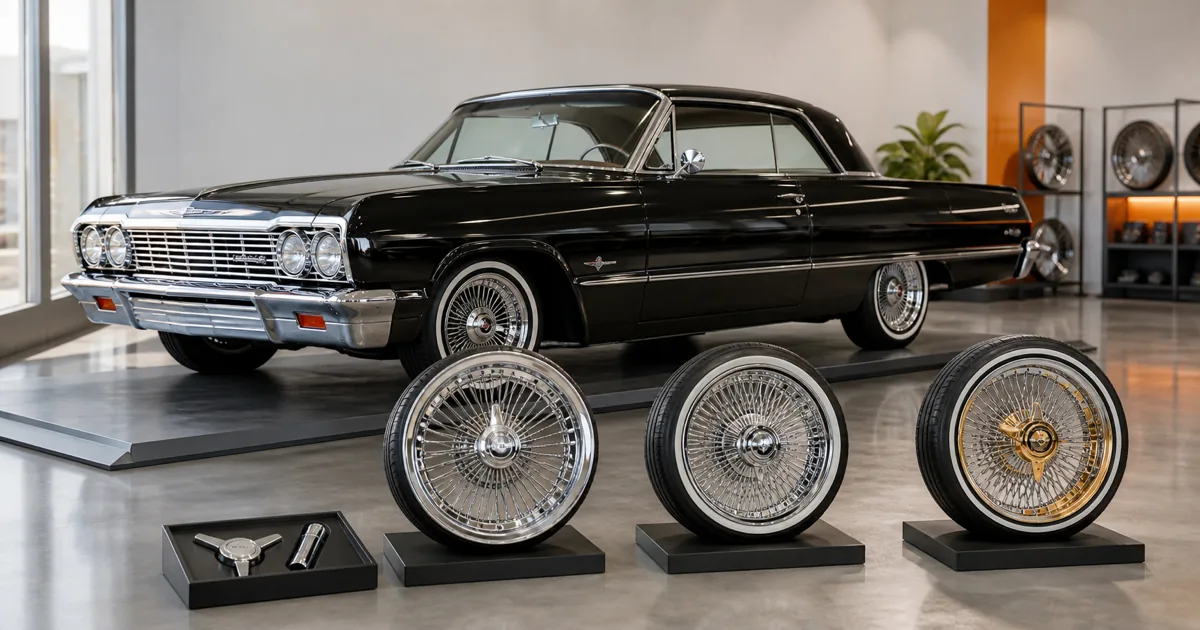
Wire wheels can completely change the character of a lowrider or classic car, but a wheel that looks right in a photograph is not automatically suitable for the vehicle. A good buying process separates style decisions from fitment decisions. First compare the visual details you prefer. Then verify the product specifications, vehicle information, mounting system, accessories, and order terms before paying.
Choose a Wheel Size
Wheel diameter has a major effect on the proportions of the car. Smaller-diameter wire wheels are closely associated with many traditional lowrider builds, while larger diameters create a more modern custom appearance. Popularity should not be the only reason to select a size: tire availability, brake clearance, suspension movement, fender clearance, steering clearance, ride height, and the intended stance must also be considered.
13-inch wire wheels can provide a compact, period-influenced appearance with a visually taller tire sidewall. 14-inch wire wheels retain a classic lowrider character while changing the wheel-to-tire proportions. Whether either size works on your vehicle depends on the actual wheel specifications, brake package, suspension setup, tire choice, and available clearance.
Do not assume that changing only the tire will make an unsuitable wheel diameter fit. Wheel width, backspacing or offset, hub and brake clearance, and overall tire diameter also matter. Modified brakes, drop spindles, air suspension, hydraulics, axle changes, and body modifications should be disclosed before fitment is reviewed.
Questions to answer before selecting a size
- What wheel diameter and width are listed for the product?
- What tire size will be used, and is the tire included or sold separately?
- Will the wheel and tire clear the brakes, suspension, steering components, and body?
- Has the vehicle been lowered or otherwise modified?
- Is the goal a traditional lowrider profile or a larger-diameter custom look?
Compare 72-Spoke and 100-Spoke Designs
Spoke count primarily changes visual density. A 72-spoke wheel generally leaves more visible space between spoke lines, creating a cleaner and more open face. A 100-spoke wheel generally looks denser and fuller, with more visual texture around the center and rim.
Neither number is universally better. Choose according to the role you want the wheels to play in the build. A more open design can allow paint, trim, tires, and body lines to remain the main focus. A denser design makes the wheels more visually prominent.
Do not assume that 100 spokes automatically means greater strength, durability, or load capacity. Those characteristics require verified information about the individual product’s materials, construction, testing, and specifications. Spoke count also does not confirm vehicle fitment.
| Design Detail | 72-Spoke | 100-Spoke |
|---|---|---|
| Visual density | More open | More filled-in |
| General impression | Clean and traditional | Detailed and visually prominent |
| Fitment | Must be confirmed from product and vehicle specifications, not spoke count | |
For a more detailed comparison, read 72-Spoke vs. 100-Spoke Wire Wheels, or browse 72-Spoke Straight Lace and 100-Spoke Straight Lace products from similar viewing angles.
Straight Lace vs. Cross Lace
Lace pattern describes how the spokes appear to travel between the center area and the rim. Straight lace generally creates a more uniform and orderly direction across the wheel face. Cross lace creates more visible spoke intersections, producing a layered and intricate appearance.
Compare lace patterns using clear front-facing and three-quarter product photos. The front view makes the path and intersections easier to see; the angled view shows the depth of the wheel and spoke layers. Avoid comparing wheels photographed at very different angles because perspective and reflections can disguise the actual pattern.
Spoke count and lace pattern are separate choices. A 72-Spoke Cross Lace wheel can look significantly different from a 72-spoke straight-lace wheel even though both have the same stated spoke count. Read Straight Lace vs. Cross Lace Wire Wheels for a close-up visual comparison.
Standard, Reverse and FWD Configurations
Wheel configuration affects both appearance and mounting position. Terms such as standard, reverse, and FWD should not be treated as styling labels alone, and their exact meaning can vary by manufacturer. Always compare the actual dimensions and application information for the product.
Standard configuration
A standard configuration generally positions the wheel center and mounting surface for a more conventional lip depth and backspacing relationship. The word “standard” does not mean it fits every stock vehicle.
Reverse configuration
A reverse configuration commonly positions the center differently to create a deeper outer lip and a different backspacing profile. That change can affect suspension, brake, steering, and fender clearance. A reverse wheel should not be selected only because the deeper lip looks attractive.
FWD configuration
An FWD-designated wire wheel is generally intended around the mounting and clearance needs found on certain front-wheel-drive applications, often with a shallower outer lip or different offset relationship. The FWD label does not guarantee compatibility with every front-wheel-drive vehicle, and it does not replace a fitment review.
Chrome vs. Gold Finishes
Finish changes how the wheel works with the vehicle’s paint, trim, interior details, and other brightwork. Chrome produces a bright reflective appearance that pairs naturally with polished trim and bumpers. Gold can be used across the center, spokes, nipples, knock-off, or selected accents to create more contrast and draw attention toward the wheel.
Review the exact product photos and selected options carefully. Phrases such as “gold center,” “gold spokes,” or “gold accents” do not describe the same finish layout. Images may also show optional chips, knock-offs, or plating choices that are not included in the base price.
Finish does not determine fitment. It does affect care: use the cleaning and maintenance instructions provided for the actual finish, rinse away contaminants, and avoid unapproved abrasive or acidic cleaners. Do not assume every chrome- or gold-finished component has identical materials or care requirements.
Knock-Offs, Chips and Adapters
These components serve different purposes and should not be grouped together as decoration.
Knock-offs
On a compatible knock-off wire wheel system, the knock-off is the threaded center component used to secure the wheel to its matching adapter. Styles may differ, but appearance does not make two knock-offs mechanically interchangeable.
Chips
A chip is the decorative medallion or insert used with a compatible center or knock-off style. Confirm the design, quantity, and compatibility instead of assuming the emblem shown in a photograph is included.
Knock-off adapters
The adapter connects a compatible knock-off wire wheel system to the vehicle hub. It must match the vehicle-side bolt pattern, the wire wheel system, and any required left- or right-side position. Read Wire Wheel Adapters Explained if a listing such as 6x139.7/6x135 is unfamiliar.
At CR Wire Wheels, knock-offs, chips, and knock-off adapters are selectable paid options on the product page. They are not included unless they appear in your chosen configuration and final order summary. Do not rely only on the accessories visible in product photography.
Vehicle Information and Fitment
Enter the vehicle’s year, make, and model on the product page when ordering. This information helps identify the typical factory application, but it may not be enough when a model has multiple trims, drivetrains, brake packages, or hub configurations.
Tell us if the vehicle has non-factory brakes, hubs, axles, wheel studs, suspension, hydraulics, air suspension, body modifications, spacers, adapters, or a previous bolt-pattern conversion. Factory fitment data may no longer apply after these changes.
Fitment may require confirmation of:
- Wheel diameter and width
- Bolt pattern
- Offset or backspacing
- Center-bore and hub clearance
- Brake, suspension, steering, and fender clearance
- Adapter type and left/right components
- Tire size and overall tire diameter
- Vehicle modifications
Do not choose a wheel based only on another owner’s vehicle photo. Two cars with the same model name can have different brakes, suspension, hubs, or previous modifications. If a required measurement or configuration is uncertain, have the vehicle inspected by a qualified wheel installer before ordering.
What to Review Before Ordering
Before adding the wheels to your cart, review the complete product page and final configuration rather than relying on the title or first image.
- Quantity: Confirm whether the price is for one wheel, a pair, or a set.
- Wheel specifications: Verify diameter, width, configuration, spoke count, lace pattern, and finish.
- Tires: Confirm whether tires are included and, if so, which size and quantity.
- Accessories: Check the selected knock-offs, chips, adapters, tools, valve stems, and hardware.
- Vehicle details: Enter the correct year, make, and model and disclose relevant modifications.
- Fitment status: Resolve any unanswered clearance, mounting, or adapter questions before payment.
- Shipping: Review processing time, estimated transit time, tracking, duties, taxes, and import-fee responsibility.
- Returns: Read the eligibility rules before mounting or installing the wheels.
- Installation: Arrange for a qualified professional familiar with the purchased wire wheel system.
Review the Shipping Policy and Refund Policy before ordering. If product options or vehicle details are unclear, contact CR Wire Wheels before the wheels are purchased or installed.
Start Comparing Wire Wheels
Browse by size, spoke count, lace pattern, and configuration, then complete the vehicle information on the product page.
Related Articles
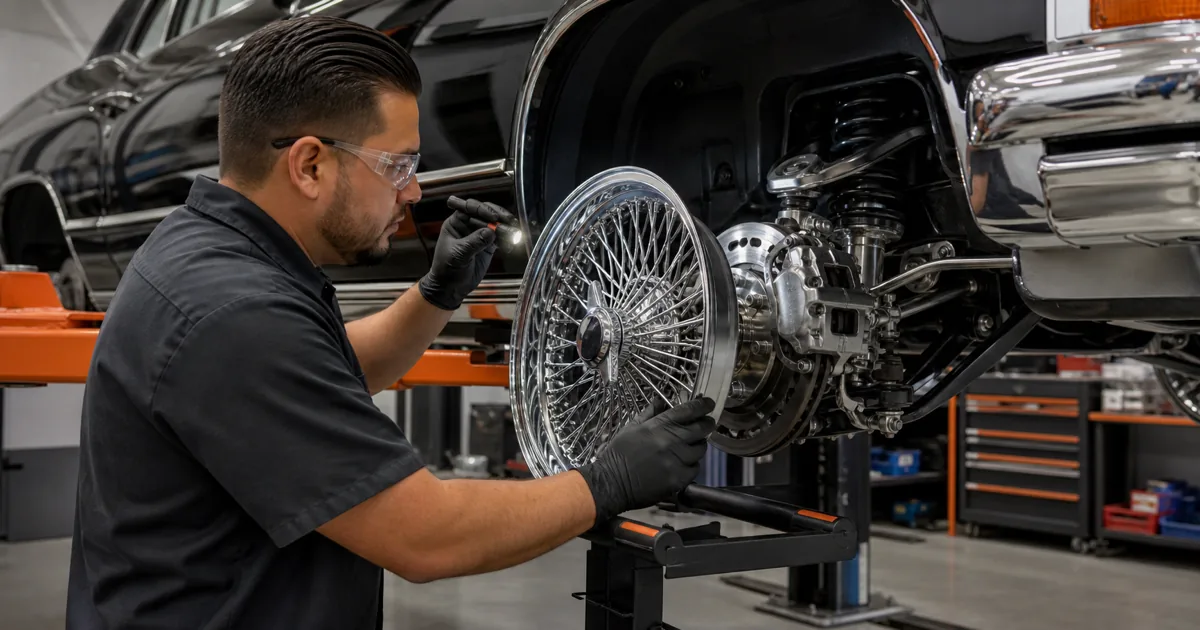
How to Test-Fit Wire Wheels Before Mounting Tires
Before tires are mounted, have a qualified installer inspect the wheels, confirm the adapters and side-specific components, and test-fit the system without damaging it. This can reveal clearance or order problems while the wheels are still unused and easier to evaluate.
Read More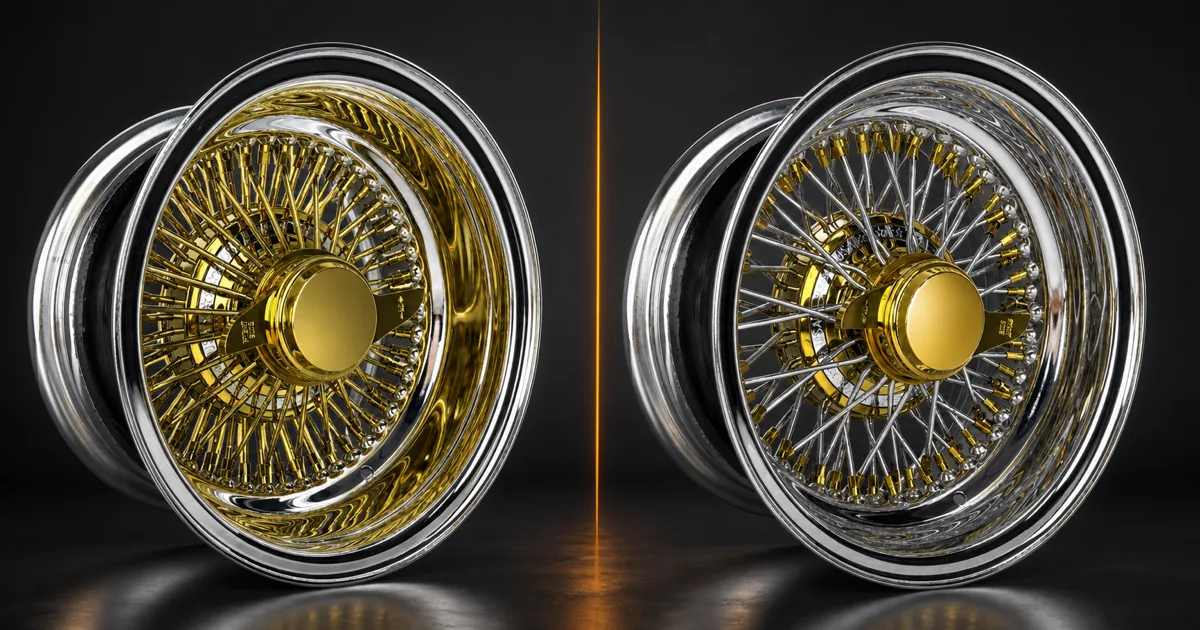
Straight Lace vs. Cross Lace Wire Wheels
Straight lace wire wheels use a more orderly, radial spoke path, while cross lace wheels create visible overlaps and a more layered face. Compare both patterns, learn how spoke count changes the result, and review what actually determines vehicle fitment.
Read More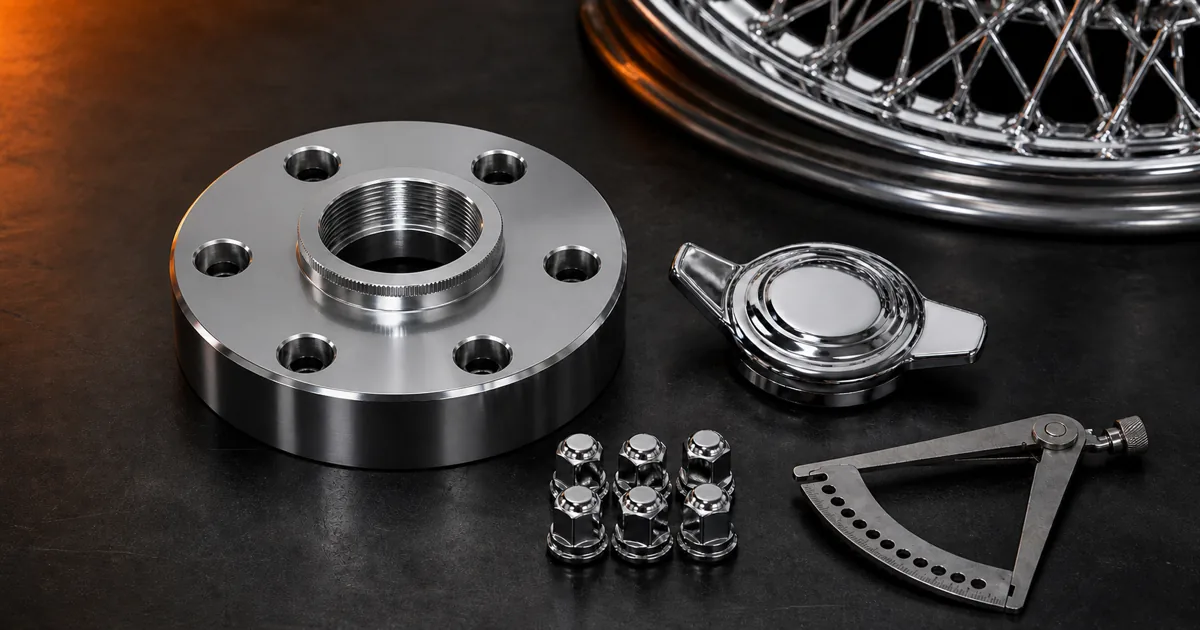
Wire Wheel Adapters & Bolt Patterns
Wire wheel adapter listings can be confusing when they combine bolt-pattern numbers, left- and right-side components, and knock-off hardware. This guide explains what those terms usually mean, what information is needed before ordering, and why installation should follow the instructions supplied with the actual components.
Read More