
Wire Wheel Adapters & Bolt Patterns
Wire wheel adapter listings can be confusing when they combine bolt-pattern numbers, left- and right-side components, and knock-off hardware. This guide explains what those terms usually mean, what information is needed before ordering, and why installation should follow the instructions supplied with the actual components.
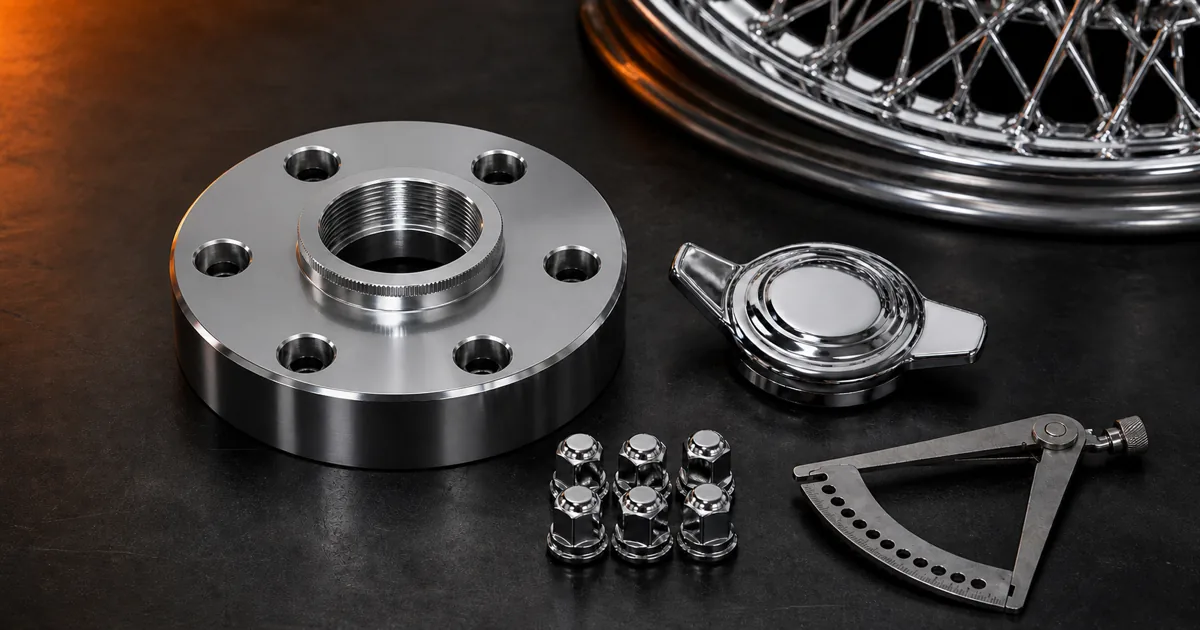
A wire wheel adapter is not a universal spacer and should not be selected by appearance alone. The adapter must match the vehicle-side mounting pattern, the wire-wheel system, the required left- or right-side position, and the hardware specified for that assembly. A listing such as 6-139.7/6-135 provides useful information, but it does not by itself confirm that the complete wheel setup will fit your vehicle.
What Does a Wire Wheel Adapter Do?
On a knock-off-style wire wheel system, the adapter creates the connection between the vehicle hub and the wire wheel. In a common arrangement, the adapter mounts to the vehicle’s original wheel studs. The wire wheel then engages the adapter, and a threaded knock-off cap secures the wheel as designed by the manufacturer.
The adapter may also contain drive features that transfer force between the adapter and wheel. For the system to work correctly, the mounting surfaces, hardware, thread direction, wheel, adapter, and knock-off must all belong to a compatible configuration.
Not every wire wheel uses an adapter. Some wire wheels are direct bolt-on designs and attach with conventional wheel fasteners. Before ordering accessories, confirm whether the product is described as knock-off, center-lock, or direct bolt-on. Do not assume that components from different systems can be mixed.
Understanding Bolt Pattern Numbers
A bolt pattern is commonly written as two numbers separated by an “x.” The first number is the number of wheel studs or lug positions. The second is the diameter of the imaginary circle passing through the centers of those positions, usually measured in millimeters.
| Notation | Lug Positions | Bolt-Circle Diameter | Common Inch Reference |
|---|---|---|---|
| 6x139.7 | 6 | 139.7 mm | 6x5.5 |
| 6x135 | 6 | 135 mm | Approximately 6x5.3 |
Having the same number of lugs does not make two patterns interchangeable. Both examples use six lug positions, but the circles have different diameters. An adapter drilled only for 6x139.7 should not be forced onto a 6x135 vehicle hub, and elongated holes or improvised hardware are not substitutes for the correct component.
Bolt pattern is only one part of fitment. Center-bore and hub clearance, mounting-surface contact, stud and hardware requirements, brake clearance, wheel dimensions, offset or backspacing, and vehicle modifications may also affect whether the system is suitable.
What Does 6x139.7 / 6x135 Mean?
In many wheel and adapter listings, a slash between two bolt patterns indicates a dual-pattern or dual-drilled component. In that context, 6x139.7 / 6x135 usually means the component has mounting provisions intended to accommodate either a six-lug 139.7 mm pattern or a six-lug 135 mm pattern.
It does not mean that one vehicle uses both patterns at the same time. It also should not automatically be read as “this converts 6x139.7 to 6x135.” The slash may be seller shorthand, and adapter designs vary. Confirm the meaning from the product description, part number, drilling layout, markings, and supplied instructions before purchase.
If the product page is unclear, send the part description and your vehicle information before ordering. A partial label such as “6-lug adapter” is not enough because several different six-lug bolt-circle diameters exist.
Knock-Off Adapters and Wheel Installation
A knock-off system is designed as a group of matching components rather than a collection of interchangeable accessories. The vehicle-side adapter, wheel center, drive surfaces, knock-off thread, cap, fasteners, and installation tool must be appropriate for one another.
At a high level, the adapter mounts to the vehicle hub, the wheel engages the adapter, and the knock-off cap threads onto the matching adapter to retain the wheel. That description is not an installation procedure. The order of inspection, required clearances, permitted hardware, tightening method, thread engagement, torque requirements, initial checks, and maintenance schedule depend on the product manufacturer’s instructions.
Do not copy a torque figure from a forum, another vehicle, or a different adapter brand. The correct value can depend on the vehicle studs, fasteners, adapter design, materials, and manufacturer requirements. A qualified installer should use the instructions supplied with the purchased components and the applicable vehicle service information.
At CR Wire Wheels, knock-offs, chips, and knock-off adapters are selectable paid options on the product page. They are not included unless they appear in your selected configuration and order summary. Review the quantity and selected options before payment.
Why Left- and Right-Side Components Matter
Many traditional knock-off systems use side-specific adapters and caps with different thread directions. The purpose is to keep the fastening action appropriate for the side of the vehicle and the system’s design. Installing a left-side component on the right side—or the reverse—can damage threads and may allow the assembly to loosen.
Identify parts using the manufacturer’s stamped, engraved, or otherwise specified LEFT, RIGHT, L, R, or directional markings. Confirm that the adapter and knock-off belong on the same vehicle side and follow the tightening direction shown in the instructions.
Some manufacturers use colors as an additional visual aid, but color conventions are not universal. A red, white, blue, or uncolored part should never be assigned to a side based on color alone. Markings and product-specific documentation take priority. If the side or thread direction cannot be positively identified, stop and contact the seller or manufacturer.
Vehicle Information Needed Before Ordering
Start by entering the vehicle’s year, make, and model on the product page. This information helps identify the typical factory configuration, but it may not be sufficient when a model has multiple trims, drivetrains, brake packages, hub configurations, or previous modifications.
Basic information
- Model year
- Vehicle make
- Vehicle model
- Trim or submodel, when applicable
- Front-wheel drive, rear-wheel drive, all-wheel drive, or four-wheel drive, when relevant
Modification details
- Non-factory brakes, hubs, axles, or wheel studs
- Suspension changes, lowering, air suspension, or hydraulic setups
- Body or fender modifications that affect clearance
- Existing spacers or adapters
- Any known bolt-pattern conversion
Information that may be requested
- Verified bolt pattern
- Hub and brake-clearance measurements
- Wheel-stud diameter, thread pitch, and usable length
- Current wheel and tire size
- Clear photographs of the hub, brakes, and existing mounting surface
Do not guess a measurement to complete an order. If the vehicle is modified or the specification cannot be verified, have a qualified wheel installer inspect and measure it.
Common Adapter Selection Mistakes
1. Assuming all six-lug patterns are the same
The lug count is only the first number. A 6x135 pattern and a 6x139.7 pattern are different even though each uses six lug positions.
2. Reading a slash as an automatic conversion
A listing such as 6x139.7/6x135 often describes a dual-pattern component. It does not automatically mean the adapter converts one vehicle pattern into another or that it works with every six-lug vehicle.
3. Selecting by year, make, and model without disclosing modifications
Factory lookup information may no longer apply after brake, axle, hub, suspension, or bolt-pattern changes. Tell the seller about modifications before the order is confirmed.
4. Ignoring left- and right-side markings
Side-specific adapters and knock-offs must remain on their designated sides. Do not rely only on color or assume all four components use identical threads.
5. Mixing parts from different systems
Similar-looking threads, caps, and adapters may use different dimensions, drive features, materials, or instructions. Use the matched components specified for the wheel system.
6. Assuming every accessory is included
Check whether the product price covers one wheel or a set and whether knock-offs, chips, adapters, tools, tires, and hardware are included or optional. For CR Wire Wheels products, the selectable knock-offs, chips, and knock-off adapters are paid product-page options unless explicitly stated otherwise.
7. Using generic torque numbers or installation advice
Torque requirements and tightening procedures can vary. Use the documentation supplied with the actual components and the applicable vehicle service information.
When to Ask a Professional Installer
Knock-off wire wheel systems should be installed and inspected by a qualified professional familiar with wire wheels, adapters, side-specific threads, and the requirements of the purchased components. Professional help is especially important when:
- The vehicle has modified brakes, hubs, axles, suspension, or wheel studs
- The adapter does not sit fully and evenly against the intended mounting surface
- There is uncertainty about the bolt pattern, center bore, clearance, or hardware
- Left/right markings or tightening directions are missing or unclear
- Threads, drive surfaces, studs, fasteners, or knock-offs show damage or unusual wear
- The installed assembly has rubbing, looseness, vibration, noise, or inconsistent rotation
- The supplied instructions conflict with another source of information
The safest buying decision is not simply choosing the adapter with familiar-looking numbers. Verify the vehicle, verify the product, review what is included, and make sure the installer has the instructions for the exact wheel and adapter system being installed.
Need Help Before Ordering?
Enter your year, make, and model on the product page. If your vehicle is modified or the adapter listing is unclear, contact us before purchase with the relevant vehicle and component details.
Related Articles
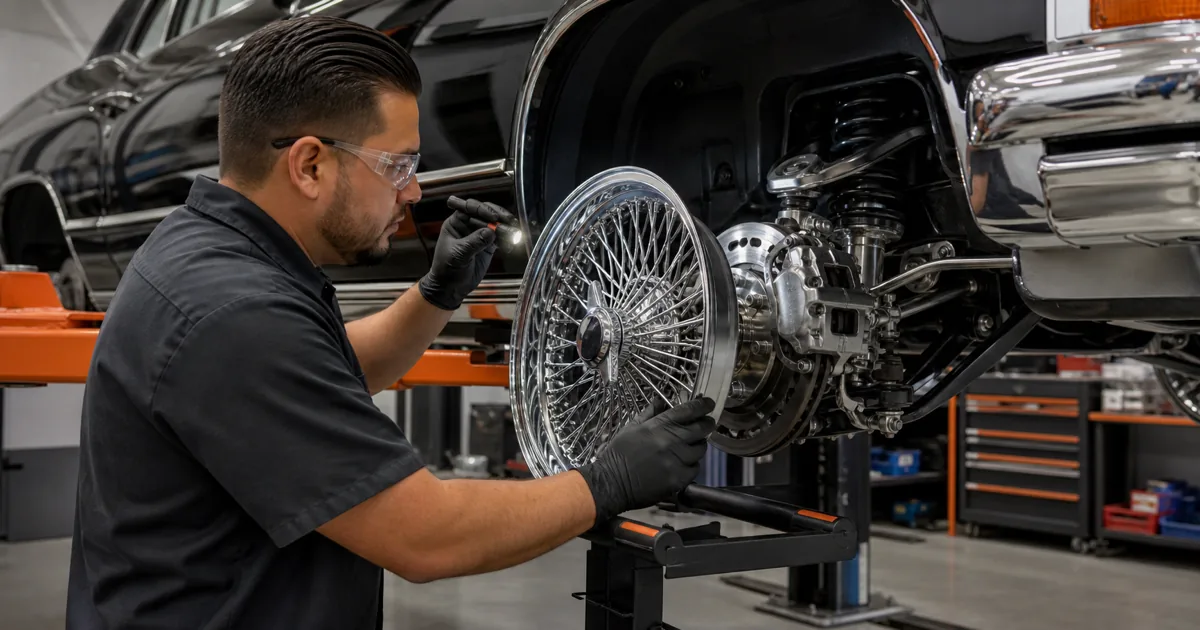
How to Test-Fit Wire Wheels Before Mounting Tires
Before tires are mounted, have a qualified installer inspect the wheels, confirm the adapters and side-specific components, and test-fit the system without damaging it. This can reveal clearance or order problems while the wheels are still unused and easier to evaluate.
Read More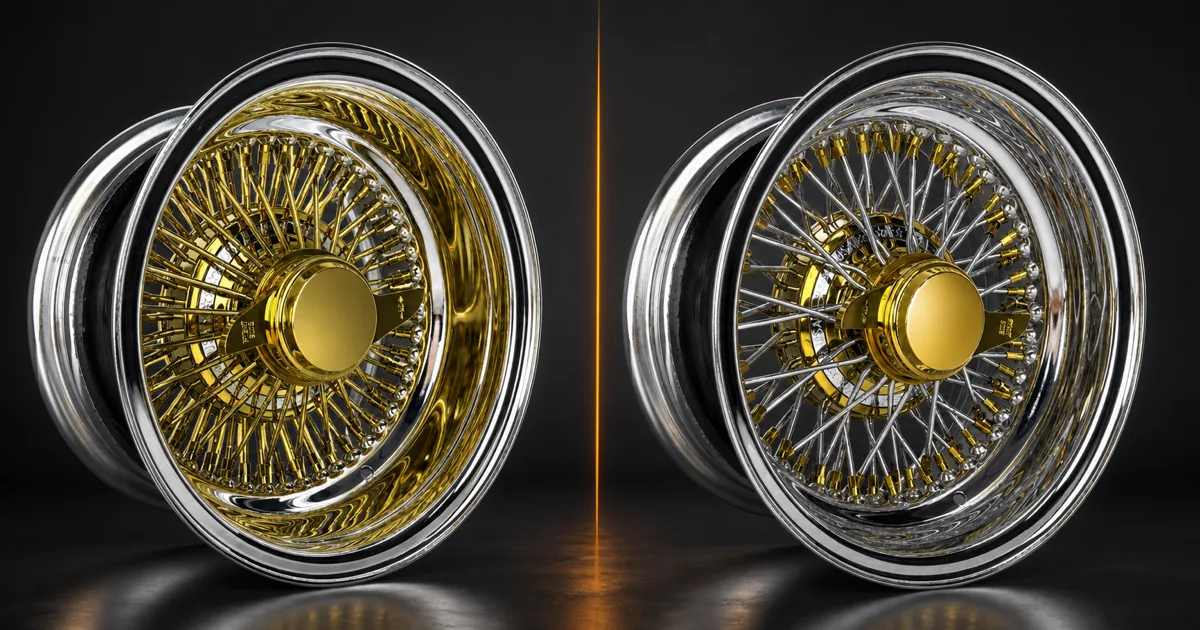
Straight Lace vs. Cross Lace Wire Wheels
Straight lace wire wheels use a more orderly, radial spoke path, while cross lace wheels create visible overlaps and a more layered face. Compare both patterns, learn how spoke count changes the result, and review what actually determines vehicle fitment.
Read More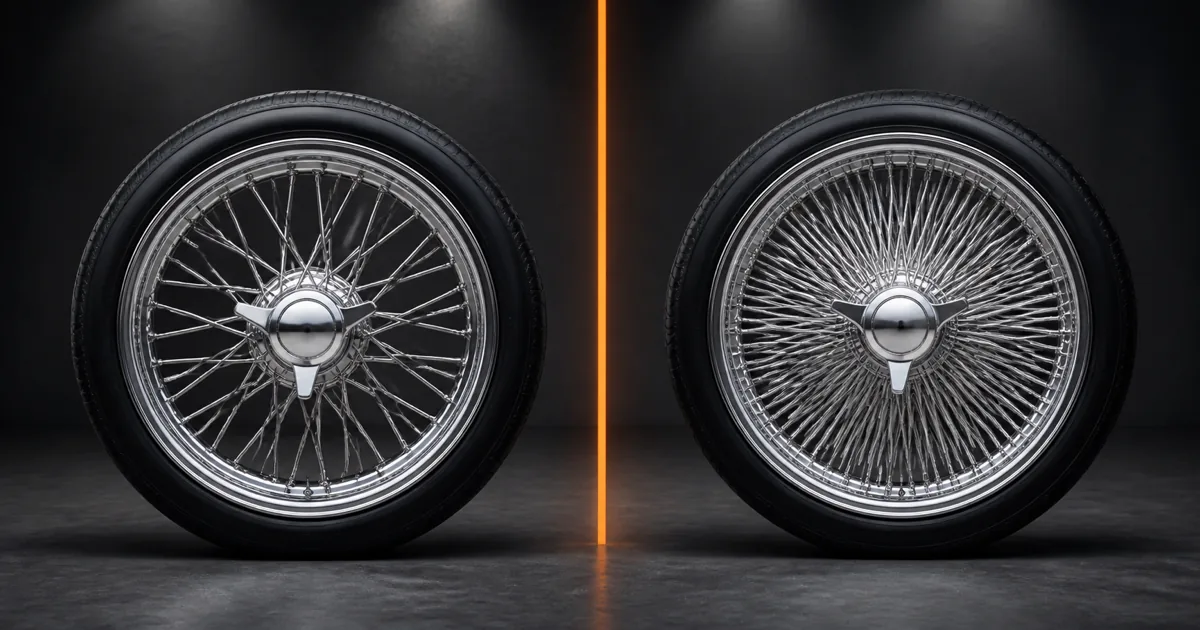
72-Spoke vs. 100-Spoke Wire Wheels: What’s the Difference?
Compare 72-spoke and 100-spoke wire wheels by appearance, lace pattern, available sizes, finishes, and fitment considerations. Learn which style better matches the look you want for your lowrider or classic car.
Read More