
1964 Chevrolet Impala Wire Wheels: A Buyer’s Guide
Choosing 1964 Impala wire wheels starts with the classic lowrider look, but the purchase needs to match the car you actually own. A restored cruiser, a disc-brake conversion, and a build with hydraulics may share the same body lines while requiring different clearance checks.
Start by deciding how much attention you want the wheels to draw. Then compare specific CR Wire Wheels styles, document your Impala’s current equipment, and confirm the complete wheel, tire, and mounting system before ordering.
Start with the Look You Want
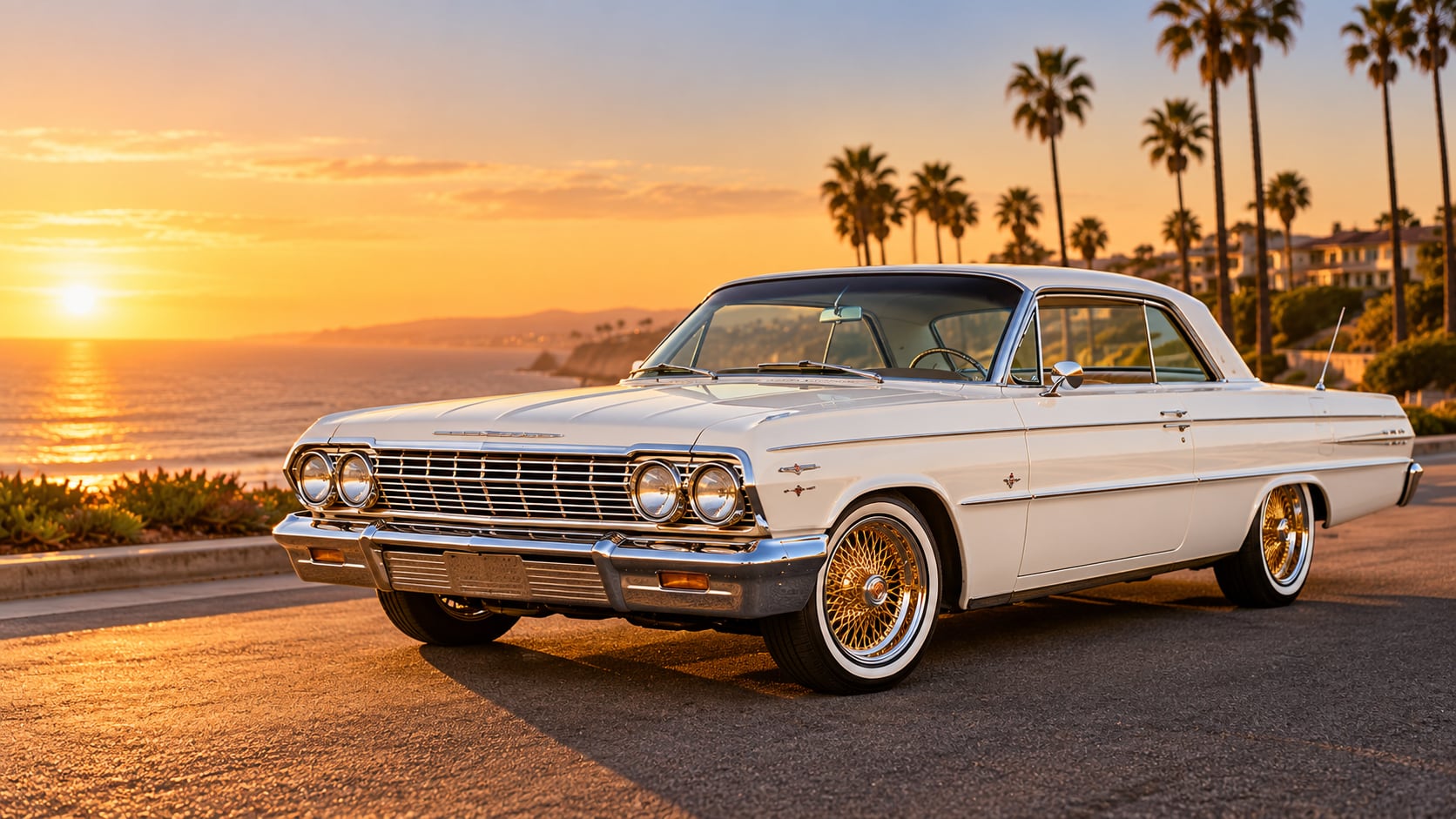
The ’64 Impala’s long body, horizontal trim, and broad chrome bumpers give you a useful starting point: decide whether the wheels should continue those clean lines or become a stronger visual accent.
For a restrained cruiser, an open spoke pattern and chrome finish can complement the existing brightwork. A denser wheel face adds detail beneath the long quarter panels and makes the wheels more prominent alongside a simple paint scheme.
With deep burgundy paint, chrome offers a cool contrast; gold-colored details introduce a warmer accent. If the car already has elaborate paintwork, a simpler wheel face may keep the overall presentation easier to read. These are styling choices, not conclusions about fitment or performance.
Consider the tire in the same view. A whitewall adds another bright ring around the wheel; a black sidewall places more emphasis on the metalwork. Compare complete wheel-and-tire proportions at your intended driving height, rather than choosing from a close-up wheel photo alone.
Comparing 13-Inch and 14-Inch Wire Wheels
A 13-inch wheel emphasizes the compact wheel appearance associated with traditional lowriders. A 14-inch wheel gives the metal portion slightly more visual presence without moving into a large-diameter custom look. With a similar overall tire diameter, the smaller wheel leaves more visible sidewall.
On the Impala, judge that relationship against the full length of the body. Changing wheel diameter does not necessarily make the complete wheel-and-tire assembly larger: tire selection determines the final outside diameter.
CR lists both 13-inch and 14-inch options, including 13x7 and 14x7 styles. The second number is wheel width, which matters for tire compatibility and clearance. The actual inner rim shape and spoke-to-brake space also matter; a larger diameter alone does not approve a wheel for a brake conversion.
Use the 13-inch vs. 14-inch comparison for the broader size discussion. For your Impala, the next step is checking the shortlisted wheel against the installed brakes and intended tire.
Spoke Count, Lace Pattern, and Finish
At a comparable size, 72 spokes generally create a more open face, while 100 spokes create a denser appearance. Straight Lace gives the spokes a more orderly visual direction; Cross Lace shows more intersections and layers. Neither spoke count nor lace pattern establishes strength or load capacity.
The following are CR catalog styles to compare, not confirmed 1964 Impala fitments.
Appearance preference | CR style to compare | Still confirm |
|---|---|---|
Open face with an orderly pattern | Tire compatibility and complete mounting dimensions | |
More visible spoke crossings and a larger wheel face | Brake clearance and wheel-and-tire position | |
Denser chrome detail | 13x7 Chrome 100-Spoke Straight Lace Reverse Wire Wheel with Engraved Hub | Configuration, clearances, and selected accessories |
Gold-colored accents with chrome detail | 13x7 Center Titanium Gold 72-Spoke Cross Lace Reverse Wire Wheel | Finish placement and compatible mounting components |
The Center Titanium Gold listing specifies a chrome hub ring. Treat the finish name as the product’s description, not evidence of a particular material or coating process. Compare its photos with the chrome versions to decide how much color you want around the center.
To isolate lace pattern, compare wheels with the same diameter, spoke count, and finish. Otherwise, several design changes can make one pattern appear busier than it really is.
Original or Modified? Check Your Impala’s Current Setup
Identify more than “a ’64.” Chevrolet offered multiple Impala body styles and a separate Impala Super Sport series. Tell the seller whether yours is a Sport Coupe, convertible, sedan, or another body style, and identify the trim accurately. A two-door hardtop photo does not describe every Impala configuration.
Next, separate what you know from what you assume about the running gear:
Brakes: A disc conversion can change caliper, rotor, hub, and mounting-position requirements. Supply the kit manufacturer and part number, plus its wheel-clearance information when available.
Suspension: Lowering parts, hydraulics, or air suspension change where clearance must be evaluated. The installer needs the intended driving height and operating range, including steering movement—not just the lowest parked position.
Axles and hubs: A replacement rear axle or changed hubs can alter the mounting pattern and wheel position. Record the components actually installed at each end.
Body and existing hardware: Disclose wheel-opening changes, spacers, adapters, and altered studs. Existing wire wheels do not prove that their mounting parts match a new system.
If you are buying the car, request receipts and component records before ordering wheels. If its history is uncertain, have an installer identify the equipment instead of describing it as stock.
Wheel Configuration and Mounting Components
Standard and Reverse are configuration names. Standard does not mean factory Impala fitment; Reverse is commonly associated with a deeper-dish appearance. A deep outer lip cannot establish where the assembled wheel will sit.
Offset describes the mounting surface’s position relative to the wheel centerline. Backspacing measures from that surface to the inboard rim edge. Request numerical measurements for the exact wheel and clarify whether they describe the bare wheel or the assembly relative to the vehicle hub. CR’s configuration guide explains the distinction.
For a compatible knock-off system, the wheel carries the tire, the adapter connects the vehicle hub to the wheel, and the knock-off retains the wheel on that system. A decorative center chip is an insert for a compatible knock-off; it does not replace retaining hardware. Similar-looking parts from different brands or systems are not automatically interchangeable.
The CR products above offer INDIVIDUALLY (1PC) and SET OF 4 selections. Knock-offs and adapters are separate paid selections; compatible chips are optional paid additions. Review the configured cart rather than assuming the photo shows everything included.
What to Confirm Before You Order
Vehicle: Year, make, model, body style, trim, known modifications, and current wheel-and-tire sizes.
Wheel: Exact product, diameter, width, configuration, numerical offset/backspacing, and documented load suitability.
Mounting system: Verified vehicle pattern, hub requirements, matching adapter and knock-off, and product-specific instructions.
Tires: Exact size and model, load suitability, and the tire manufacturer’s approved rim-width range.
Clearance: Brakes, steering, suspension, and body at both axles, including the intended suspension movement.
Order: One wheel or four, every accessory quantity, shipping charges, import fees, and cancellation/return terms.
CR’s Shipping Policy states that orders ship from China; applicable import charges remain the recipient’s responsibility unless checkout expressly includes them. Review the Refund Policy before tire mounting: installation marks or mounted tires can affect return eligibility.
Choosing Your Next Step
Shortlist two styles from the table, then contact CR Wire Wheels with your Impala’s details and modification records. Ask about the complete configuration before paying. After delivery, use the test-fit guide with a qualified installer before mounting tires.
Frequently Asked Questions
Will 13-inch wire wheels fit every 1964 Impala?
No. Diameter alone cannot establish clearance or mounting compatibility. The particular wheel, brakes, hubs, adapter, tire, and vehicle modifications determine what must be checked.
Does a disc-brake conversion affect wheel choice?
Yes. Give the installer the exact brake-kit information and shortlisted wheel specifications. A kit’s minimum diameter guidance is only part of the clearance review.
Are adapters and knock-offs included?
They are not included in the base wheel price. Select and pay for the required compatible components, then confirm their quantities in the order summary. Tires are not implied by a wheel photo.
What if I do not know the car’s modification history?
Tell CR which details are unknown. Ask your installer to identify the brakes, hubs, suspension, and rear axle, and provide photographs or measurements as requested. Avoid entering “stock” simply because the car looks original.
Related Articles
Classic Impala Wheel Guide: Fitment, Style and Stance
Few American cars have a silhouette as recognizable as the classic Chevrolet Impala. Its long body, generous chrome trim and low, confident profile give it a...
Read More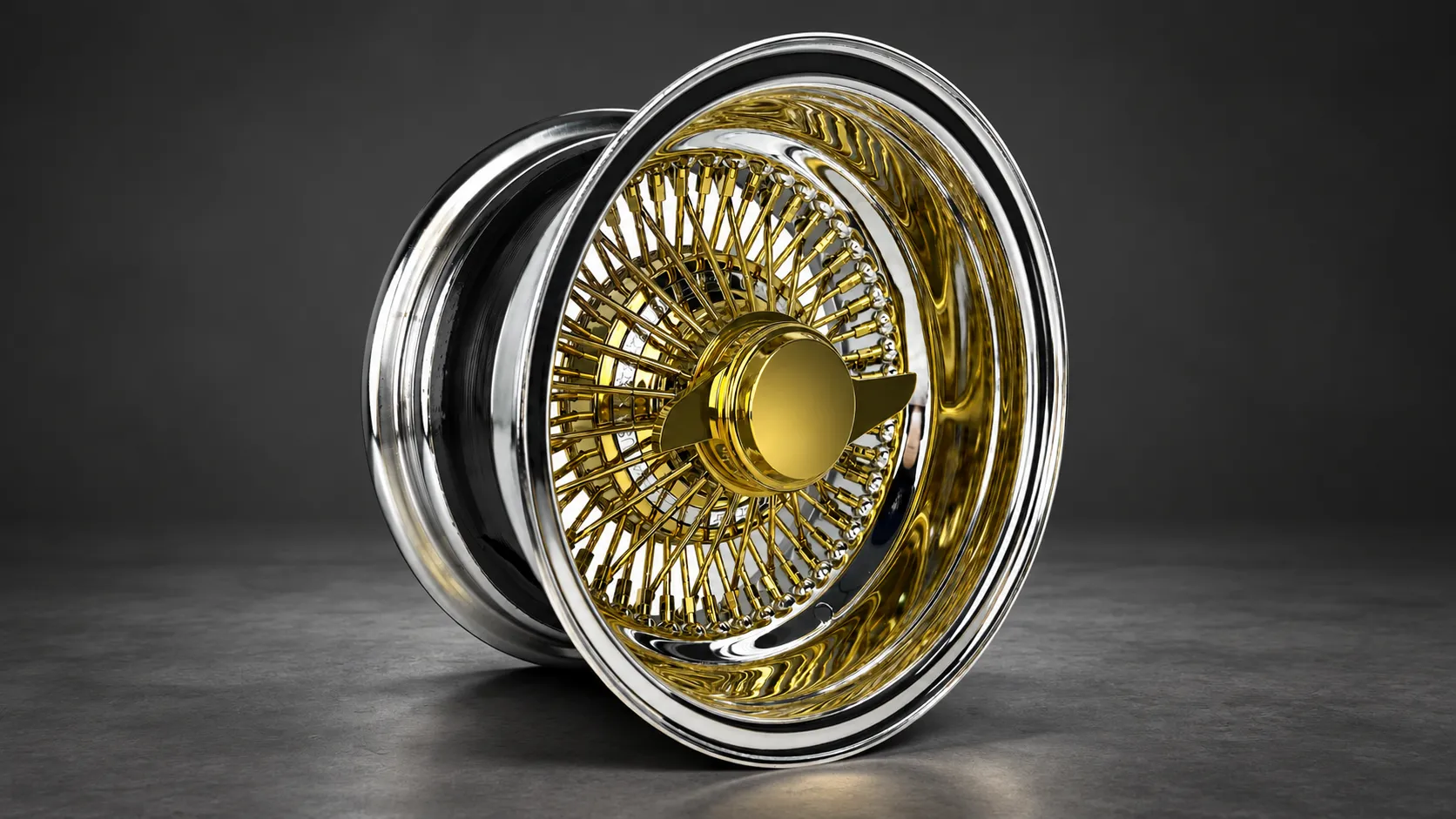
Standard vs. Reverse vs. FWD Wire Wheels: What’s the Difference?
Standard, Reverse, and FWD labels help narrow your wire-wheel choices, but they do not confirm fitment. Learn how appearance, offset, backspacing, adapters, and vehicle measurements work together before choosing wheels for your build.
Read More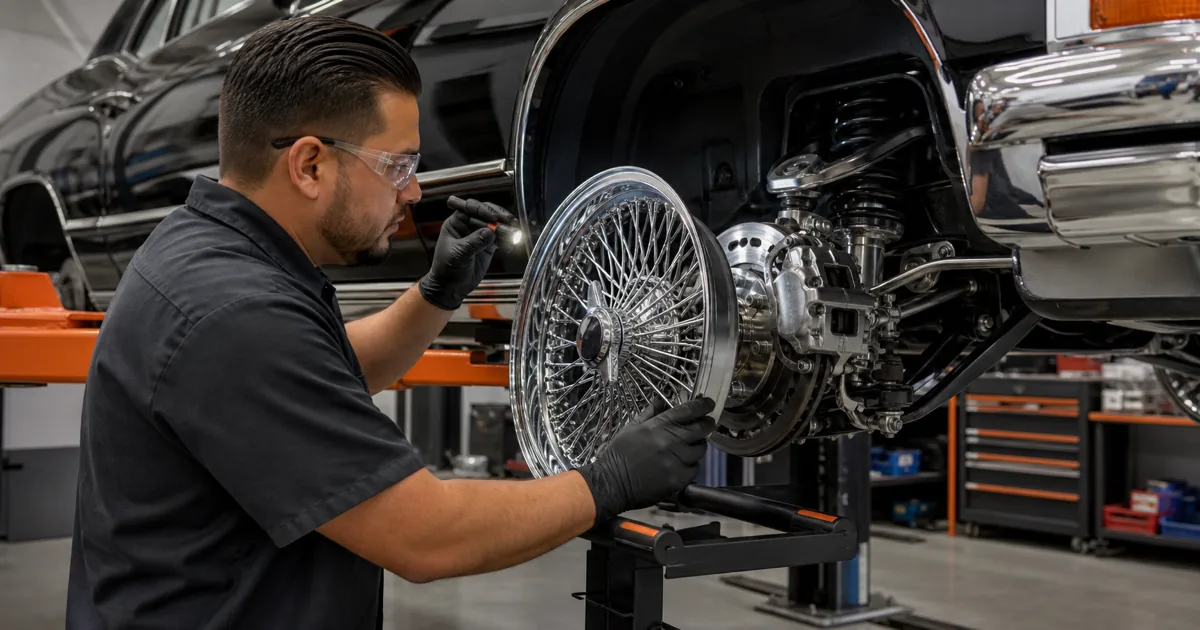
How to Test-Fit Wire Wheels Before Mounting Tires
Before tires are mounted, have a qualified installer inspect the wheels, confirm the adapters and side-specific components, and test-fit the system without damaging it. This can reveal clearance or order problems while the wheels are still unused and easier to evaluate.
Read More