
How to Test-Fit Wire Wheels Before Mounting Tires
Before tires are mounted, have a qualified installer inspect the wheels, confirm the adapters and side-specific components, and test-fit the system without damaging it. This can reveal clearance or order problems while the wheels are still unused and easier to evaluate.
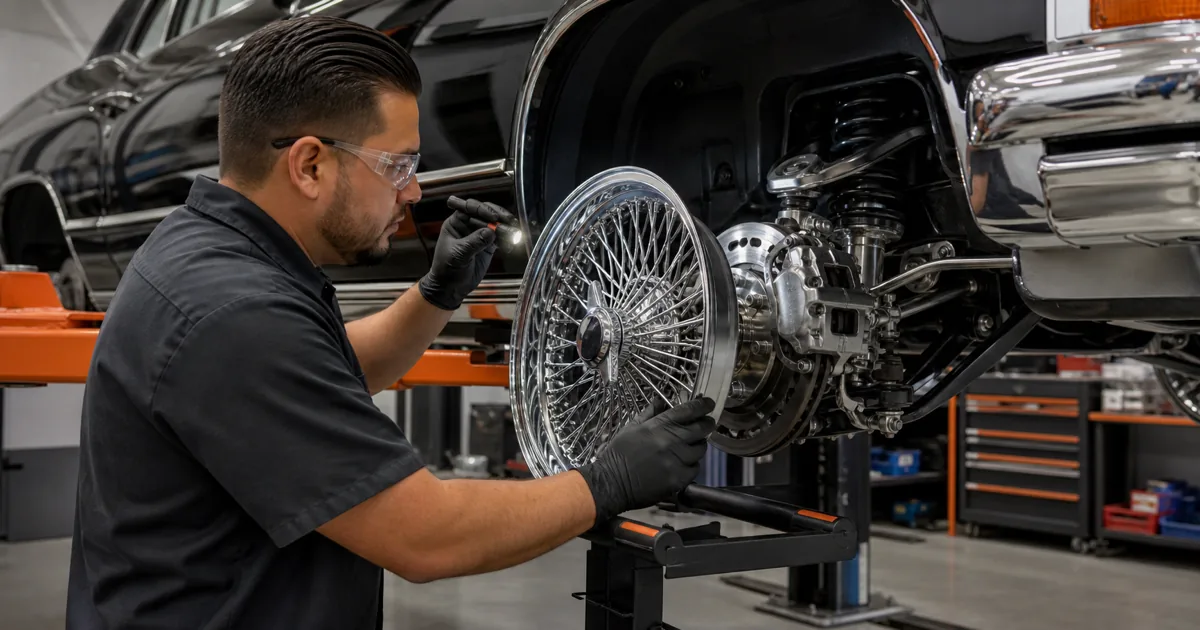
A pre-installation check has two purposes. First, it helps identify fitment or component problems before the vehicle is driven. Second, it gives the buyer an opportunity to report an incorrect, damaged, or unsuitable item before tire mounting, tightening, balancing, road use, or modification leaves evidence of installation.
Test-fitting does not mean forcing the wheel into place or completing a do-it-yourself installation. The wheels should be handled carefully, kept clean, and evaluated by an experienced installer using the product-specific instructions and applicable vehicle service information.
Why Test-Fitting Matters
Wheel diameter alone does not confirm fitment. Two wheels described as the same size can use different widths, configurations, backspacing or offset, centers, adapters, and mounting systems. The vehicle may also have brakes, suspension, hubs, wheel studs, axles, or bodywork that differ from the expected factory setup.
A careful test-fit allows a professional to check whether the supplied components correspond with the order and whether the bare wheel and adapter system can be evaluated without first committing to tire mounting. This is important because adding a tire changes the space required around the suspension and body, while the tire-mounting process itself may leave marks or other signs of use.
Industry installation material commonly recommends checking bare-wheel fitment before tire mounting. Some product-specific instructions then call for mounting only one tire and checking that single wheel-and-tire assembly before mounting the remaining tires. Follow the sequence supplied with your exact products rather than treating one manufacturer’s instructions as universal.
Inspect the Wheels Before Installation
Open the shipment carefully and keep the boxes, protective covers, labels, hardware packaging, and other original materials. Photograph the unopened package if it appears crushed, punctured, wet, or otherwise damaged. Then document each wheel and accessory as it is removed.
Confirm the order
- Count the wheels and packages received.
- Compare the model, size, width, spoke count, lace pattern, configuration, and finish with the order confirmation.
- Verify the selected knock-offs, chips, adapters, and other paid options.
- Check whether the order is for individual wheels or a complete set.
Inspect condition
- Look for shipping damage, dents, cracks, bent areas, scratches, finish damage, or visibly damaged spokes.
- Check threaded and drive surfaces for visible damage, contamination, or deformation without forcing parts together.
- Make sure labels, part numbers, and left/right markings are present and readable.
- Keep protective materials in place wherever possible while the order is being verified.
If anything is damaged, incorrect, missing, or inconsistent with the order, stop before tire mounting or installation. Take clear photographs of the product, markings, packaging, and shipping label, then contact CR Wire Wheels with the order number and a description of the issue.
Confirm Wheel and Adapter Information
Confirm that the wheel configuration and adapter system match what was ordered for the vehicle. A knock-off wire wheel, its adapter, and its knock-off cap work as a matched system. Similar-looking parts from another system should not be substituted.
Information the installer should verify
- Vehicle year, make, model, trim, and relevant drivetrain information
- Wheel diameter, width, and standard, reverse, or FWD configuration
- Vehicle-side bolt pattern and any applicable hub information
- Adapter part number, drilling, and compatibility with the wheel system
- Required left- and right-side adapters and knock-offs
- Supplied fasteners, tools, and product-specific instructions
Many knock-off systems use side-specific threads. Identify each component from the manufacturer’s LEFT, RIGHT, L, R, or directional markings and supplied documentation. Do not assign sides from color alone because color conventions are not universal.
A description such as 6x139.7/6x135 often indicates a dual-pattern component, but the listing must be confirmed from the actual part number, hole layout, markings, and instructions. Read Wire Wheel Adapters Explained before ordering or using an unfamiliar adapter.
Check Brake, Hub, Suspension and Body Clearance
Clearance checks should be carried out by a qualified installer with the vehicle safely supported on appropriate professional equipment. The installer should follow the supplied wheel and adapter instructions and inspect the actual mounting surfaces before evaluating the wheel.
Adapter and hub area
The installer should confirm that the intended adapter and mounting surfaces can seat as required without obstruction. Clips, weights, damaged surfaces, incorrect hardware, excessive stud length, or other interference may prevent the assembly from sitting correctly. Do not remove, grind, or modify anything unless the applicable manufacturer and vehicle procedures specifically allow it.
Brake clearance
Check the wheel and adapter relationship around the brake caliper, rotor or drum, and other brake components. There must be no unintended contact. A visual gap that looks sufficient while the wheel is held at an angle may disappear when the wheel is properly seated.
Suspension and steering clearance
The installer should evaluate nearby control arms, tie rods, springs, shocks, struts, hydraulic or air-suspension components, and other suspension or steering parts. On steerable wheels, clearance must be considered across the appropriate steering range, not only with the wheels pointing straight ahead.
Body and tire clearance
A bare rim cannot confirm every tire-related clearance. After the bare-wheel and adapter checks pass, the correct tire size and overall tire dimensions must be considered at the fender, inner body, suspension, and steering areas. Suspension movement, ride height, vehicle load, and body modifications can change the available space.
If the product-specific instructions call for a one-tire confirmation step, mount one approved tire on one verified wheel and have the installer recheck the complete wheel-and-tire assembly before proceeding with the remaining tires. Do not treat that step as permission to drive the vehicle before the full system has been installed and inspected as required.
Do Not Mount All Tires Before Confirming Fitment
Mounting four tires at once can turn one unresolved fitment question into four altered products. Tire equipment, valve-stem installation, balancing weights, fasteners, adapters, knock-offs, and contact with the vehicle may leave marks or evidence that the wheels have been mounted or installed.
CR Wire Wheels’ ordinary return eligibility requires products to remain unused, uninstalled, undamaged, complete, and in their original packaging. Fitment-related returns may be rejected or may involve return shipping and a restocking fee. Review the current Refund Policy before any tire is mounted.
This does not remove your ability to report a product that arrived damaged, defective, or incorrect. It means the problem should be documented and reported before additional work makes its original condition difficult to verify. If the issue is visible at unboxing or during a non-damaging professional inspection, stop immediately and contact us.
A conservative sequence
- Inspect and document every wheel and accessory.
- Verify the order, labels, adapters, and left/right components.
- Have a professional evaluate bare-wheel and adapter fitment according to the supplied instructions.
- If the applicable instructions require it, mount one approved tire and recheck the complete assembly.
- Proceed with the remaining tires only after the professional confirms the required fitment and clearance checks.
Signs That Installation Should Stop
Stop the test-fit or installation process when any component cannot be positively identified or does not behave as the supplied instructions describe. Do not solve uncertainty by applying more force.
- The wheel, size, finish, configuration, or accessories do not match the order.
- An adapter or knock-off has missing, conflicting, or unreadable side markings.
- The bolt pattern, part number, hardware, or adapter application is uncertain.
- The intended mounting surface cannot sit in the required position without obstruction.
- The wheel, adapter, threads, drive surfaces, fasteners, or spokes appear damaged.
- The wheel contacts or appears too close to the brakes, hub, suspension, steering, or body.
- The assembly rubs, binds, rocks, sits unevenly, or cannot be inspected as required.
- Fitment would require unapproved grinding, drilling, spacers, hardware substitution, or other modification.
- The tire size does not match the approved rim-width range or creates unresolved clearance concerns.
- The installer does not have the correct instructions or experience with the wheel system.
When to Contact CR Wire Wheels
Contact us before tire mounting, component modification, or road use if the shipment appears incorrect or the professional installer cannot confirm the required fitment. Early documentation usually makes the issue easier to understand and resolve.
Send the following information
- Order number
- Vehicle year, make, model, trim, and drivetrain when relevant
- Description of known brake, hub, axle, suspension, body, or bolt-pattern modifications
- Wheel and adapter part numbers or markings
- Clear photos of the wheel, adapter, knock-off, labels, packaging, and affected area
- Photos showing left/right or directional markings
- A concise description of where the professional installer found interference or uncertainty
- Requested measurements or a short video, if our support team asks for them
Do not send only a close-up that removes all context. Include an overall photo of the vehicle hub or wheel opening and additional close views of the specific concern. Keep the products clean and retain all original packaging while the issue is reviewed.
Have a Fitment Question?
Contact us before mounting tires or modifying any wheel, adapter, knock-off, or vehicle component.
Related Articles
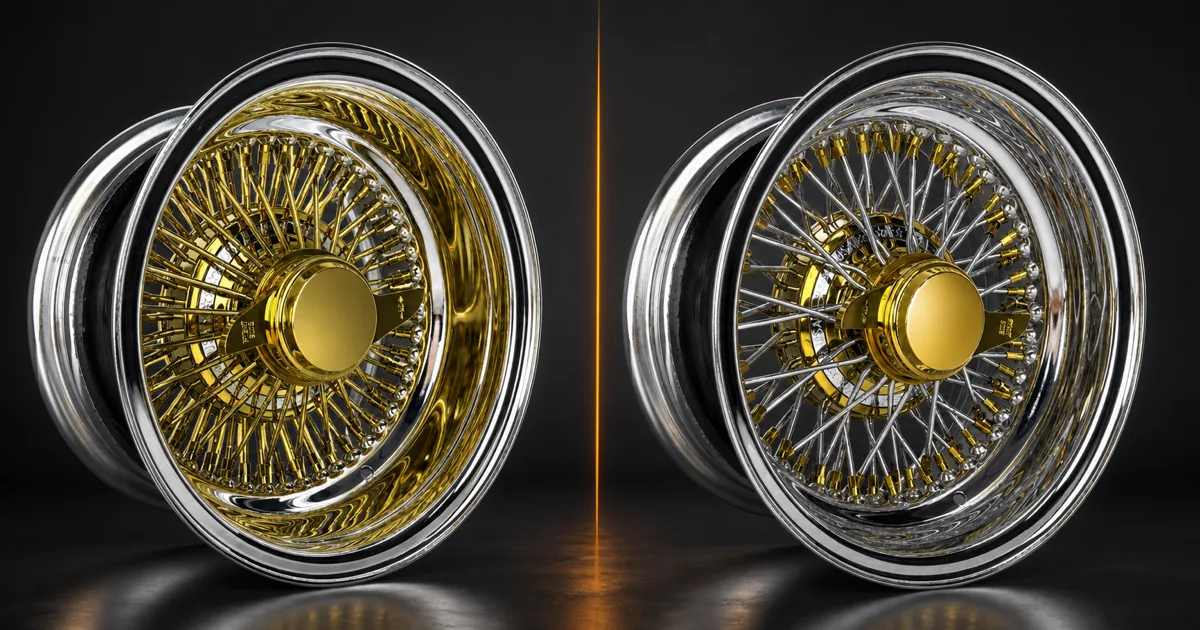
Straight Lace vs. Cross Lace Wire Wheels
Straight lace wire wheels use a more orderly, radial spoke path, while cross lace wheels create visible overlaps and a more layered face. Compare both patterns, learn how spoke count changes the result, and review what actually determines vehicle fitment.
Read More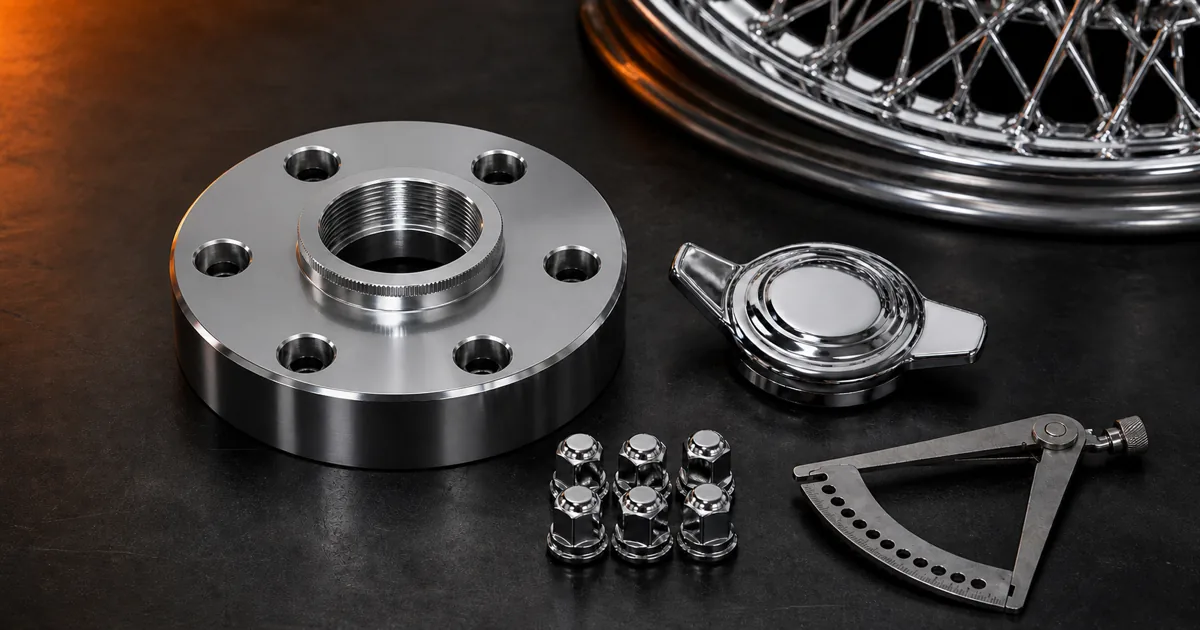
Wire Wheel Adapters & Bolt Patterns
Wire wheel adapter listings can be confusing when they combine bolt-pattern numbers, left- and right-side components, and knock-off hardware. This guide explains what those terms usually mean, what information is needed before ordering, and why installation should follow the instructions supplied with the actual components.
Read More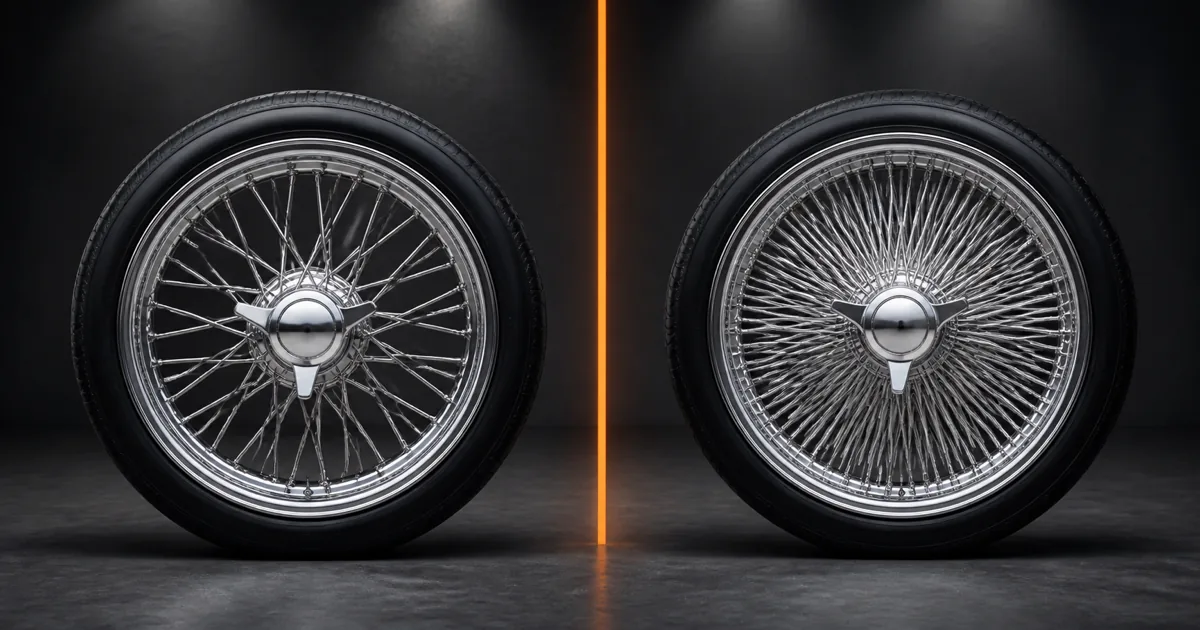
72-Spoke vs. 100-Spoke Wire Wheels: What’s the Difference?
Compare 72-spoke and 100-spoke wire wheels by appearance, lace pattern, available sizes, finishes, and fitment considerations. Learn which style better matches the look you want for your lowrider or classic car.
Read More